

Vertebral Compression Fracture (VCF)
A compression fracture is a type of fracture that occurs when one or more bones in the spine (vertebrae) collapse or compress due to pressure. This often results in a loss of height in the affected vertebra and can lead to significant pain and functional limitations.
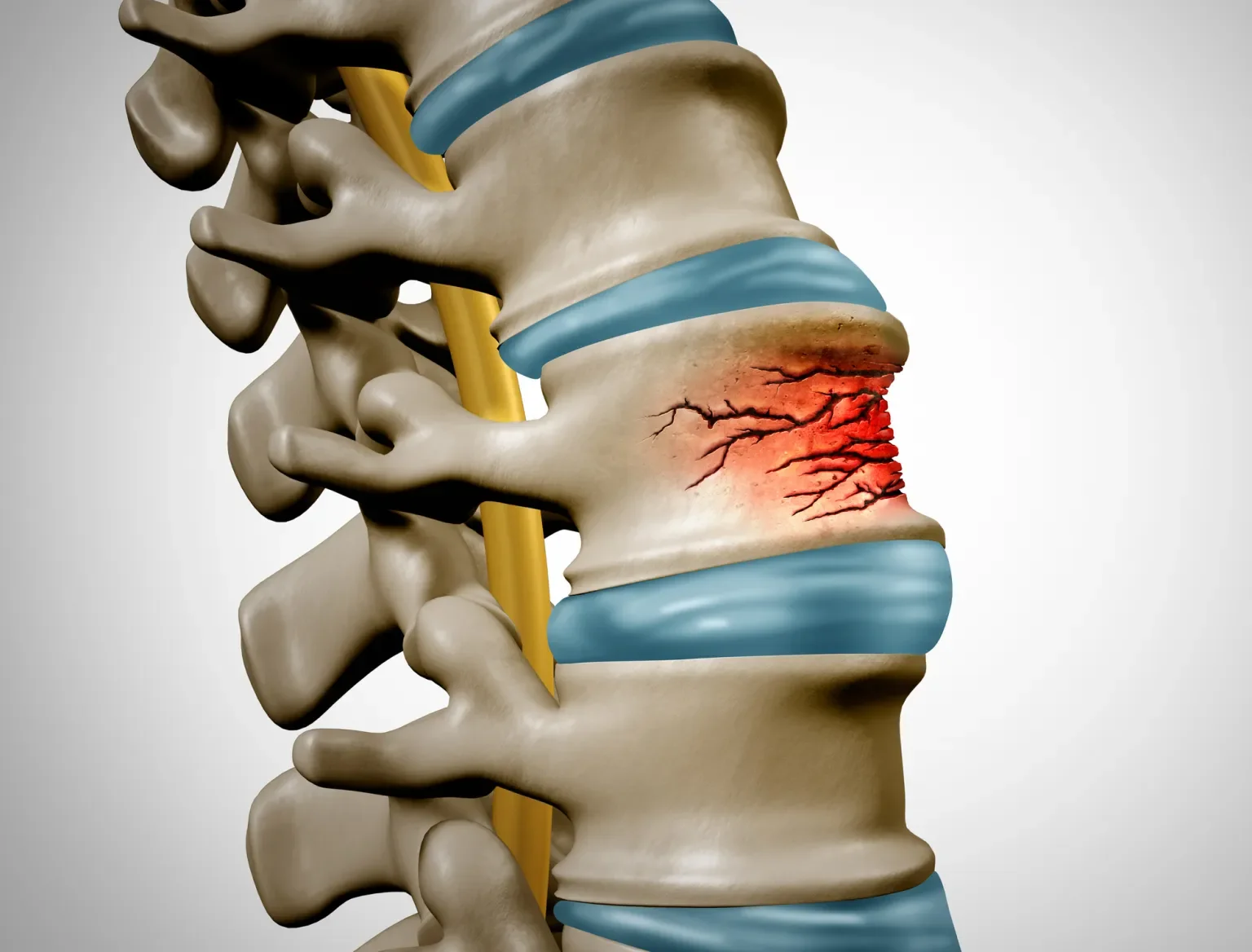
Back Pain: Sudden, severe pain in the back, which may worsen with movement, standing, or sitting.
Localized Tenderness: Tenderness or sensitivity in the area of the fracture.
Decreased Height: A noticeable loss of height over time, often due to multiple compression fractures.
Kyphosis: A forward curvature of the spine, leading to a hunched posture.
Other Symptoms:
Limited Mobility: Difficulty in bending, twisting, or performing daily activities due to pain.
Numbness or Tingling: In some cases, nerve compression can cause numbness, tingling, or weakness in the legs.
Symptoms
Osteoporosis: A common cause, particularly in older adults, where weakened bones become more susceptible to fractures.
Trauma: High-impact injuries, such as falls or accidents, can lead to compression fractures, especially in younger individuals.
Tumors: Cancerous growths in the spine can weaken vertebrae, making them prone to fractures.
Long-term Corticosteroid Use: Prolonged use of corticosteroids can weaken bones, increasing the risk of fractures.
Infections: Conditions such as osteomyelitis can weaken the vertebrae and lead to fractures.
Congenital Conditions: Some individuals may have underlying conditions that predispose them to spinal fractures.